


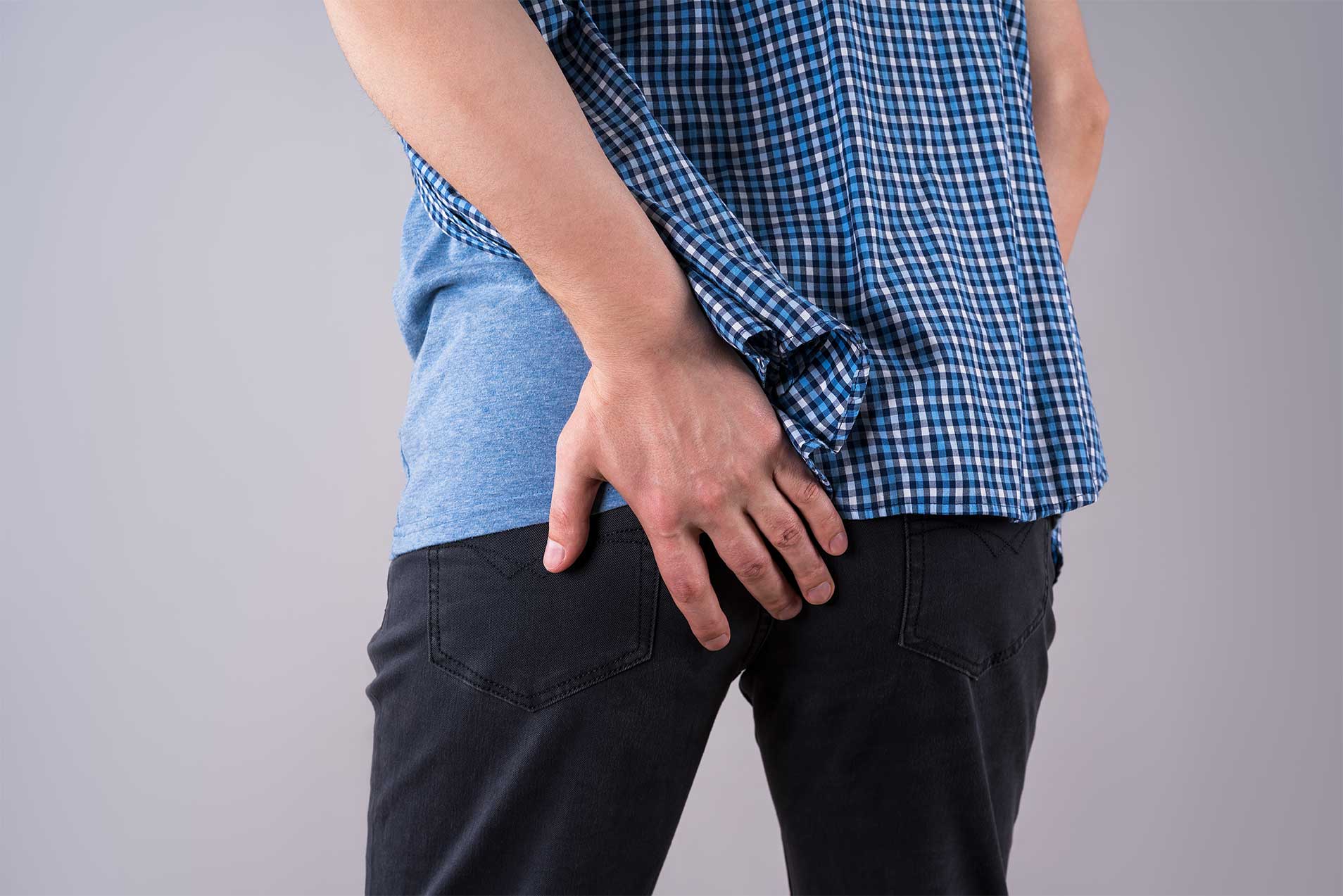

What is pruritus ani?
Pruritus ani is a common medical problem affecting both men and women. Pruritus ani most commonly affects adults, affecting from 1% to 5% of people in the general population. Men are more commonly affected than women with a 4:1 ratio. The condition is most common in people age 40s to 60s. There are many causes of pruritus ani, and an accurate diagnosis is important in order to treat the specific cause. Medical management of pruritus ani often provides patients with relief of their symptoms and improves their quality of life.
Pruritus ani is a Latin term meaning “itchy anus” and is defined as an unpleasant sensation of the skin around the anus (i.e., rectal opening) that produces the desire to scratch. Pruritus ani is classified as primary or secondary. The primary form is the classic syndrome which may not have an identifiable cause (referred to as “idiopathic”) and the secondary form has an identifiable, and often specifically treatable, cause.
Minimal stimulation of the skin may cause itching. The subsequent scratching may cause injury to the skin which produces a larger area of irritated skin. Continued scratching causes the need to scratch more, making the problem worse.
What causes pruritus ani?
This symptom of pruritus or itching is common to many anorectal conditions. One must consider hemorrhoids, excessive skin tags, fecal soilage or incontinence, anal fistulae (abnormal passageways between the bowel and an organ or skin surface), anal fissures (painful clefts or grooves), and anal warts as possible causative agents. It is not always understood what causes the long-standing history of primary pruritus ani. It is believed that an irritating secretion from the anal canal may cause the itching. The local nerve fibers in the skin may become chronically active with repetitive trauma or scratching for prolonged periods of time. There can also be itching related to disorders of nerve pathways or itching related to a central nervous system stimulus such as medications. Occasionally, itching may also be psychogenic (symptoms arise from the mind, as opposed to another organ).
Other potential causes of irritation include moisture from sweat, stool and mucus. Studies have shown that the relief of symptoms can occur promptly after the stool has been cleansed from the perianal area, indicating that stool is likely an irritant cause of itching. In addition to difficult or inadequate hygiene, overzealous or aggressive hygiene with the use of many irritating soaps, scents, and lotions may cause pruritus ani, resulting in this condition occasionally being referred to as “polished anus syndrome.” Overzealous cleaning, in addition to the use of topical steroids, can destroy natural skin barriers and cause trauma to the anal skin, making the problem worse. In a way, trying to keep it “too clean” may worsen the problem.

Dietary factors may also play a role with pruritus ani, although there are not definitive studies implicating particular food items or diets. Coffee, either caffeinated or decaffeinated, is thought to be a major contributing factor. Coffee consumption may lower the anal resting pressure (normal strength of muscle contraction at rest) and contribute to anal leakage of stool. Other dietary agents which are possible causes of pruritus ani include tea, cola, energy drinks, chocolate, citrus fruits, tomatoes, spicy foods, beer, dairy products and nuts.
Infectious processes may also result in pruritus ani. Examples include bacterial skin infections, fungal infection (although a common fungus, Candida albicans, appears to be a normal inhabitant of the perianal skin), parasitic infections with pinworms or scabies, and viral infections with anal warts.
Numerous skin conditions also cause secondary pruritus ani. Conditions that are potential causes of pruritus ani include psoriasis, seborrheic dermatitis, atopic dermatitis, contact dermatitis, lichen planus, lichen simplex, and lichen sclerosis. Local cancers such as Bowen’s disease or extra mammary Paget’s disease are also potential causes of pruritus ani.
Medical diseases that affect the entire body may also cause pruritus ani. The examples include diabetes mellitus, leukemia and lymphoma, kidney failure, liver diseases (obstructive jaundice), iron deficiency anemia, or hyperthyroidism.
While this is a wide variety of potential causes, it is important to understand that in many cases the itching has no identifiable source.
How is pruritus ani evaluated and diagnosed?
A careful medical history must be obtained from the patient focusing on the timing and duration of the pruritus ani as well as any accompanying symptoms. Toileting behaviors must be evaluated, including the frequency and quality of stools, possible stool or mucus leakage, perianal moisture sensation, or the sensation of incomplete evacuation of stool. In addition, hygiene rituals or cleansing methods after a bowel movement must be evaluated.
Travel history and current medications, including all topical agents used, must be reviewed. A detailed diet history should be taken with close attention to known dietary agents suspected of causing pruritus ani. Often a heavy consumption of caffeine with coffee, tea, cola, or energy drinks is present. Lastly, investigation regarding possible infectious agents, such as pinworms in children, should also be considered. Adults rarely harbor pinworms.
Your doctor will perform an office physical examination to provide information regarding a possible cause of the symptoms. Examination should include a thorough inspection of the skin around the anus. The skin may appear normal or may have findings such as open wounds or cracks, redness, or possible characteristic changes of thickened skin due to repeated scratching and irritation.
Primary or idiopathic pruritus ani is classified by a staging system used at Washington Hospital Center, and is based on the physical features of the skin. Stage 0 is normal skin, stage 1 is red and inflamed skin, stage 2 has thickened skin, and stage 3 has thickened skin, coarse ridges, and often ulcerations.
In addition to inspection of the perianal region, your doctor may place a finger through the anus into the rectum (digital rectal exam). Part of the evaluation of the anal canal may be completed with a small instrument or anoscope, which is referred to as “anoscopy.” An office biopsy with a small 3 or 4 mm piece of tissue may also be obtained to help with diagnosis and decision-making regarding treatment. Skin swabs or scrapings may also be obtained. Physical examination may also involve inspection of other sites of involvement. The detailed anal examination is necessary, but brief, and patients should not feel embarrassed. The examination may have some feelings of discomfort but should not be painful.
How is pruritus ani treated?
The goal of therapy is to restore clean, dry, and intact skin. Treatment can be challenging, as many cases have no clear identifiable cause.
You may notice that your problems will improve for some time with treatment but then recur. For a small number of patients, pruritus ani can be quite difficult to manage, and it may be difficult to completely relieve their symptoms. In these patients, it may be beneficial to try topical capsaicin. Capsaicin comes from Capsicum chili peppers. It is believed to work by depressing the feelings or desensitizing certain nerves. This medicine has been studied with a small number of patients, and up to 70% of patients had relief of their symptoms for up to almost 11 months. The medicine is applied with a very low concentration of 0.006%.
A very small number of patients find only minimal relief from all attempted treatment options. These individuals may benefit from injectable therapy. This particular therapy is saved for patients with persistent and intense pruritus ani. Methylene blue is a dye which can be injected into the skin and may relieve symptoms by causing destruction of the nerve endings. The methylene blue can be mixed with topical anesthetics and injected into and below the affected perianal region. Many patients do experience a change in sensation in the injected area. It may feel somewhat numb like a local anesthetic for a dental procedure. It also will turn the skin in the area blue. In very rare cases, this may be injected too close to the surface of the skin and may cause some skin breakdown or ulcerations.