


What is rectal cancer?
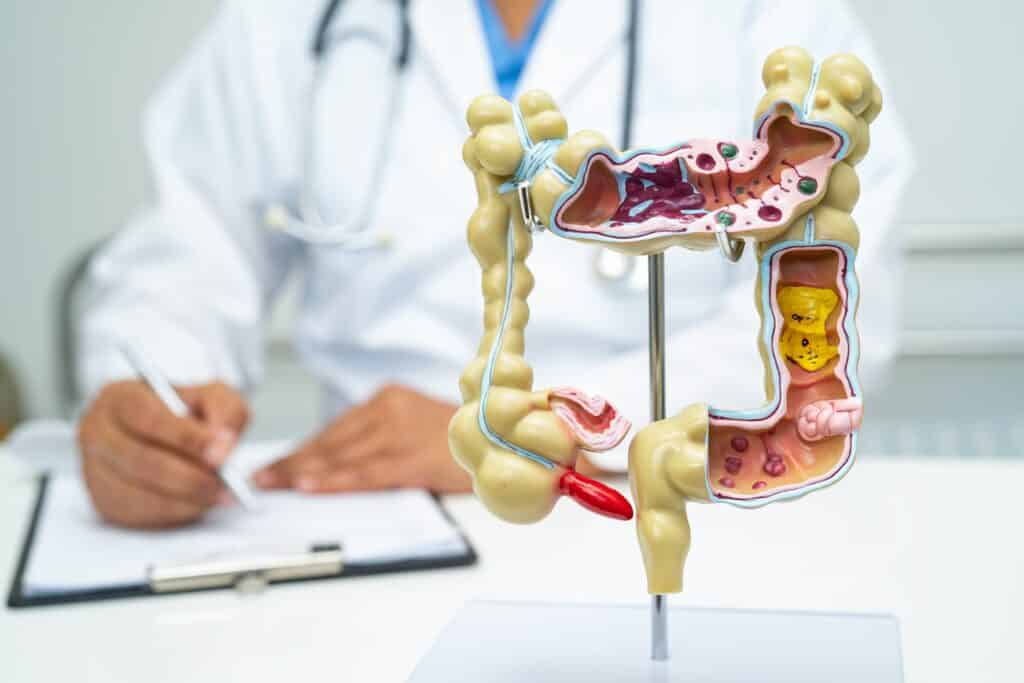
The rectum is the last six inches of the large intestine, which is composed of the colon and rectum. Colon and rectal cancers both arise from the inner lining. Despite the similarities, colon and rectal cancers are treated differently due to differences in anatomy as well as potential pathways of spread.
Colon and rectal cancers are the fourth most common form of cancer in the United States. It is estimated that there will be 151,030 newly diagnosed cases in 2022 with an estimated 52,580 deaths. The lifetime risk of developing colon or rectal cancer is 4.1%. When diagnosed in early stages, cure rates can be high.

Am I at risk for rectal cancer?
Though rectal cancer risk increases with age, there has been a noticeable trend towards earlier age at diagnosis. Recently, the recommended age when screening should start was lowered to 45. Risk factors include a family history of colon or rectal cancer, especially involving a parent or sibling, a personal history of inflammatory bowel disease, colon or rectal polyps, as well as a history of certain other types of cancer or familial cancer syndromes. With these risk factors, it is recommended to start the screening process at a younger age.
Can I decrease my risk of developing rectal cancer?
Most colon and rectal cancers start as polyps, which are growths of abnormal tissue inside the colon and rectum. Rectal cancers can be prevented by discovering and removing these polyps with colonoscopy. It usually takes years for a polyp to become a cancer, so routine detection and removal of these polyps will greatly decrease the development of colon and rectal cancers. All patients should discuss recommendations for colon and rectal cancer screening with their health care providers. Screening for the average risk patient should begin at age 45. This may be different for individuals depending on personal and family health history. Evidence also suggests that a high fiber, low fat diet may decrease the risk of developing colon or rectal cancer.
What are the symptoms of rectal cancer?
Colon and rectal cancer may have no symptoms. When symptoms are present, they are often mistaken for other problems such as hemorrhoids. Common symptoms can include a change in bowel habits, a change in the size or shape of the stools, or blood in or with the stool. Abdominal pain, unexplained weight loss, and fatigue may also occur, though they may be associated with other common health problems as well. These symptoms should always be discussed with your healthcare provider or colon and rectal surgeon.
How is rectal cancer diagnosed?
All patients should be seen by a health care provider to have a history and full physical exam, including a digital rectal exam (DRE), especially if there are changes in bowel movements and/ or rectal bleeding. An office-based proctoscopy or sigmoidoscopy (looking into the rectum with a scope, with or without a camera) can also be done in the office.
Colonoscopy is used to both detect and remove colon and rectal polyps and to diagnose and evaluate cancers of the colon and rectum. After performing a bowel cleansing the day prior to the procedure, your colon and rectal surgeon or gastroenterologist will evaluate the lining of your entire colon and rectum using a flexible scope. Any discovered polyps or areas of abnormal appearance are either removed or biopsied at the time of the colonoscopy.
Other forms of screening include FIT testing to detect traces of blood in the stool, as well as tests that look for abnormal DNA in the stool. This may help to discover cancer but are not as good at detecting polyps. These have a role in screening when used in the appropriate setting with the recommendation of your healthcare provider. If you have any of the above factors that increase your risk for colon and rectal cancer, these tests are not recommended, and it is advised that you have a colonoscopy because you are considered at higher than average risk for colorectal cancer.
What is my prognosis if I am diagnosed with rectal cancer?
The stage of the cancer (how far advanced the cancer is at diagnosis and spread of disease) is generally the most important factor; however, other things that can affect outcomes are location of the tumor in the rectum, tumor causing blockage of the bowel or perforation (a hole in the rectum) as well as the patient’s general health and ability to tolerate treatment.
Staging for rectal cancers is done before treatment, and often involves blood tests, CT scans, MRI or endorectal ultrasound, and PET scans. Blood tests include a hemoglobin level to assess for anemia and blood loss and a CEA (Carcinoembryonic Antigen) test which looks for a certain protein excreted by some colon and rectal cancers. CT scans and PET scans help to determine if the cancer has spread to other locations within the body. MRI and Endorectal ultrasound help to determine how much the tumor has spread in the area near the tumor and looks for the presence of abnormal lymph nodes. Based on the results of these tests, a stage can be determined which then guides the treatment plan.

How is rectal cancer treated?
Rectal cancer treatment is determined by the results of the staging. When the cancer is completely contained within the walls of the colon and rectum, and no suspicious lymph nodes are found, surgery is usually the primary method of treatment. When there is any evidence of penetration of the tumor through the wall of the rectum, or suspicious lymph nodes are found, initial treatment may include one of several combinations of chemotherapy and radiation therapy. This is usually then followed by surgical removal of the involved portion of rectum. Treatment of rectal cancers is tailored to the individual patient and involves a team of doctors and healthcare workers who specialize in the treatment of this disease.
Surgery is often performed by specially trained colon and rectal surgeons. Minimally invasive techniques such as laparoscopic and robotic surgery are often utilized to help to minimize the impact of surgery and assist in a speedy recovery. Depending on the individual patient and multiple technical factors, a stoma (colostomy or ileostomy) may be needed. This could be permanent or temporary, though permanent is less frequent. Sometimes if the rectal cancer is diagnosed at early stages, before the cancer penetrates deep into the rectal wall, the treatment might involve local excision of the cancer through the anus (transanal excision). The final stage in pathology might be more advanced than initially diagnosed and additional treatment with surgery or radiation and chemotherapy may be required.
Do I have to have surgery for rectal cancer?
In the last 20 years, colon and rectal surgeons around the world have found that some patients who undergo chemotherapy and radiation have no cancer left. Recent studies have demonstrated that 20-40% of patients who undergo total neoadjuvant therapy with full dose of chemotherapy and radiation have a complete clinical response to treatment. This means that no tumor is seen on imaging studies like MRI and looking inside the rectum (proctoscopy, sigmoidoscopy, or colonoscopy) shows no remaining tumor/cancer. In select patients, we can offer watch-and-wait or organ-preserving treatment, meaning that surgery is not performed for these patients in an attempt to preserve the rectum. About half of patients undergoing this approach do not end up needing surgery around 3 years after treatment. If undergoing this approach, it is imperative to have close follow up with your treatment team – medical oncologist, radiation oncologist, and your colorectal surgeon. It is necessary to undergo physical exams, follow-up imaging scans, and endoscopy every 3-6 months to ensure that the cancer does not return. In half of patients, they end up having recurrence of cancer, and as long as imaging studies do not show spread of the cancer to other parts of the body (Stage IV cancer), surgery is offered and often successful at removing the cancer.
What follow-up is needed after treatment?
After surgery, blood testing (CEA level), regular examinations and imaging studies such as CT scans are used to monitor a patient in case there is return of the cancer, or distant spread. Regular colonoscopy is essential to prevent or diagnose recurrence or a separate cancer, and to remove any polyps that grow.
Call Sacramento Colon and Rectal Surgery Medical Group today to arrange your colorectal cancer exam or book an appointment online.